Garner Health
- 4.7
- Rating
- 50.00K
- Installs
- Free
- Price

 Analysis by App-foxy
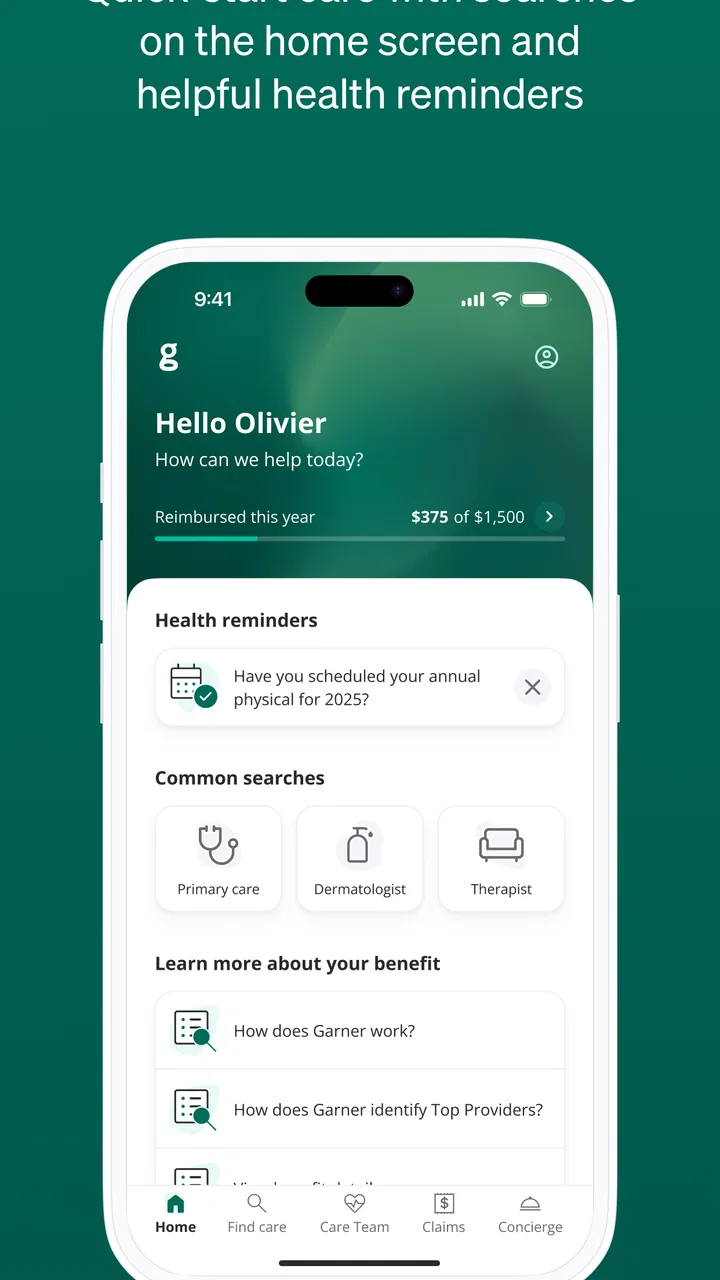
Choosing a doctor is already tiring when you are unwell, managing a long-term condition, or helping someone else with appointments. Garner Health approaches that problem from a practical angle: it is a free medical app from Garner Health that helps users look for higher-quality doctors and potentially receive reimbursement for choosing them. I found its most interesting value in the way it can support a decision before an appointment, rather than simply acting as another place to store health information.
The app has a clear purpose, but that purpose also means it is not a complete replacement for an insurer’s member portal, a telehealth service, or a clinic’s booking system. Its usefulness depends on whether its doctor-selection and reimbursement process fits your healthcare arrangement. That distinction matters, especially for people who need predictable access, assistance from another person, or a quick answer during an urgent medical situation.
How Garner Health feels to use in everyday situations
I find Garner Health most useful when a doctor search is still a decision, not yet an appointment: it gives me a focused way to weigh provider quality alongside the possibility of reimbursement. In everyday use, I would treat it as a starting point and keep a short note of what I need to verify before booking. That small habit makes the next step clearer, especially when I’m comparing options for someone else as well as myself.
You May Also Like

 Blood Strike: 2.5 Anniversary
Blood Strike’s Loadouts Turn Every Drop Into a Tactical Gamble
A close look at Blood Strike’s custom loadouts: how fast access to signature weapons reshapes its battle royale rhythm, rewards preparation, and narrows the gap between fights.

 Pandora - Music & Podcasts
Pandora’s Music Is Easy to Start, but Harder to Recover
Pandora’s strength is its low-effort path from a seed to a station. Its weak spot is how much confidence it asks you to place in connection, setup, and quiet recovery.

 8 Ball Pool
 Is Built on Rivalries, Rematches, and Routine
A close look at the rivalries, rematches, shared routines, and unanswered safety questions that turn a quick pool match into a persistent mobile community.

 Samsung Music
’s Quiet Strength Is Playing What You Already Own
Its reach comes less from spectacle than from dependable access to a personal library. That simplicity is both the app’s strongest retention engine and its ceiling.

 AccuWeather: Weather Radar
AccuWeather Review: A Quick, Clear Forecast for Everyday Decisions
For everyday plans, the best forecast is the one you can understand quickly. AccuWeather makes rain timing, radar, and local conditions easy to act on, with a few trade-offs.

 Hill Climb Racing
Why Hill Climb Racing Still Turns Crashes Into One More Run
A tiny car, a bumpy hill and one more upgrade: Hill Climb Racing keeps resurfacing because its simple chaos makes every near-miss feel personal.
More From Our News Desk
View All News


Readability and navigation come before the reimbursement idea
My first impression is that Garner Health is easier to understand when I approach it with one specific task in mind: finding a doctor I may want to see. The app’s Medical category is a good match for that focused purpose. Rather than treating healthcare as a social feed or a general wellness dashboard, it centers the experience around provider choice and the financial benefit connected to that choice.
That focus can be helpful for users who are overwhelmed by long provider directories. Traditional insurance searches often present a large list of names, specialties, addresses, and network labels, leaving the user to decide what “good” means. Garner Health gives the quality-and-reimbursement idea more prominence, which can make the selection stage feel less random. I would still treat the app as a decision aid, not as the sole authority for a serious medical choice.
The app is rated for Everyone, and its broad audience is easy to understand: an adult can use it for personal care, while a family member may use it while helping someone else compare doctors. That does not automatically make every screen ideal for every ability. Readability depends on the phone, display settings, and the amount of information shown at once. People with low vision may need larger system text or magnification, and anyone who finds medical terminology difficult may still need help interpreting what a provider-quality recommendation means in practice.
I also think the app is most comfortable for people who can pause, read, compare, and return to a decision. That is different from an emergency tool. If I had severe symptoms, needed immediate clinical advice, or was trying to reach an on-call service, I would use an appropriate urgent-care channel or emergency service instead of opening a provider-selection app.
Why the doctor-search workflow can help with decision fatigue
A useful way to approach Garner Health is to start before you need an appointment. If I were looking for a new primary-care doctor, I would use the app to create a shortlist, then check practical details through the relevant healthcare channel: location, appointment availability, accepted coverage, communication style, and whether the practice can accommodate my needs. This two-step process is more reliable than assuming that a quality signal answers every question.
The reimbursement angle may be especially valuable for someone who usually chooses the cheapest or most familiar option without investigating alternatives. A person managing repeated appointments could compare a recommended provider with the doctor they were already considering, then decide whether the possible financial benefit justifies changing practices. The important word is “possible”: reimbursement is not the same as an instant discount at checkout, so I would read the app’s instructions carefully and keep any required records.
That record-keeping point is one of my practical tips. Before booking, I would save the doctor’s details, note why the provider appeared suitable, and confirm what action is needed to qualify for reimbursement. I would not wait until after the visit to reconstruct the process from memory. In healthcare, small administrative gaps can turn a promising benefit into a frustrating follow-up.
Motor and sensory considerations during a health search
For users with limited dexterity, the main question is not simply whether the app opens; it is whether the full search and reimbursement journey can be completed without precise taps, rapid gestures, or repeated data entry. A person with tremors, joint pain, or fatigue may prefer to use a larger device, system-level touch assistance, or a trusted helper. Garner Health can fit into that supported workflow, but the person assisting should make sure the patient remains in control of the provider decision.
Voice control and screen magnification can be useful phone-level tools for someone who struggles with small controls or dense text. I would test those tools during a calm moment rather than waiting until an appointment is urgent. If a screen becomes difficult to interpret with enlarged text, the user may need to reduce the information shown at once or ask another person to review the details. That is not a flaw unique to this app, but it is important because medical choices deserve more care than ordinary shopping decisions.
People with hearing loss may appreciate that the core activity is visual provider research rather than a voice-only service. However, selecting a doctor is only the beginning. The clinic itself may communicate by phone, portal message, video, or in-person conversation, and Garner Health cannot by itself guarantee that a particular office will provide captions, interpreters, written instructions, or other accommodations. I would contact the practice directly and ask for the exact support needed before relying on the listing.
For users with cognitive disabilities, memory difficulties, or executive-function challenges, the reimbursement process may be easier if broken into small steps. I would write down three things: which doctor was selected, what appointment was made, and what proof or follow-up the app requests. A support person could help with that checklist without taking over the decision. This is a more realistic use of the app than expecting it to solve every administrative burden automatically.
Situational access: when the app is genuinely useful
Consider a realistic situation: I am helping a parent who has moved to a new area and needs a regular doctor. The insurance directory offers many names, but my parent wants someone with a strong reputation for quality and does not want to spend more than necessary. I could use Garner Health to investigate suitable doctors, discuss the shortlist with my parent, confirm the practice details, and then follow the reimbursement instructions carefully. The app would be useful as part of the process, while the final choice would still include travel distance, appointment timing, communication needs, and personal comfort.
Another strong use case is a person with a chronic condition who is tired of repeating the same search every time a specialist is needed. A quality-oriented starting point can reduce the feeling of browsing blindly. Still, I would not assume that the best-rated or recommended provider is automatically the best match for a complex condition. Experience with a particular diagnosis, coordination with existing clinicians, and the ability to offer accessible appointments may matter more than a general quality signal.
The app may also help someone who is changing doctors after a disappointing experience. Instead of searching only by distance, the user can begin with a quality-focused shortlist and then investigate whether each practice suits their preferences. This is where Garner Health feels more purposeful than a basic map search. A map can show proximity; it does not necessarily help a user think through the trade-off between convenience, perceived quality, and reimbursement.
At the same time, the app is less suitable when the need is immediate. If I need a same-day prescription question answered, a test result explained, or urgent symptoms assessed, a direct clinical service is the better route. Garner Health is about choosing care, not replacing care.
How it compares with familiar alternatives
The usual alternative is an insurance directory. That option remains essential because it is generally where coverage and network participation are checked. Garner Health adds a different lens by emphasizing higher-quality doctors and the possibility of reimbursement. I would use both rather than treating them as competitors: the directory helps establish financial and network basics, while Garner Health can help narrow the provider choice.
A general search engine or map app is faster for finding nearby offices, opening hours, and directions. It may be better when location is the deciding factor or when I already know the doctor’s name. Garner Health is more useful earlier in the process, when I want help thinking about provider quality and the financial incentive attached to that choice.
Doctor-review websites can offer personal comments and ratings, but individual experiences are often uneven and may focus on waiting rooms, staff behavior, or one isolated visit. Garner Health’s appeal is that it frames the search around a broader quality concept rather than only public comments. The trade-off is that I may want more context before making a final decision, particularly for disability-related needs that are rarely captured in a general score.
Telehealth services are another alternative, but they solve a different problem. They can make access easier when travel is difficult, while Garner Health can help with choosing a doctor, including a conventional in-person option. For someone whose main barrier is transportation, a telehealth provider may be the more direct answer. For someone who wants support selecting a longer-term clinician, Garner Health may be more relevant.
Practical friction and remaining barriers
The biggest limitation is that a reimbursement promise can create expectations that the user must still verify. I would not book solely because a doctor appears attractive in the app. I would confirm eligibility, understand the required steps, and check whether the practice can meet my medical and accessibility needs. The financial benefit is meaningful only if the administrative conditions are manageable.
There is also a human-information gap. A provider-quality recommendation cannot tell me everything about bedside manner, sensory sensitivities, wheelchair access, appointment pacing, language support, or how a clinic handles a patient who needs extra processing time. Those questions require direct contact with the office. In my view, this is where many healthcare apps stop short: they help with discovery, but the user still has to advocate for the details that make care genuinely accessible.
Another barrier is shared decision-making. A caregiver may be searching on behalf of someone who has limited vision, memory loss, or difficulty using a touchscreen. The app can be part of that arrangement, but it should not encourage a helper to make a medical choice without the patient’s involvement. I would use a shared note or discuss each shortlisted doctor aloud, especially when the patient’s preferences are specific.
People with limited data access, older phones, or little confidence with apps may also prefer a phone call or assistance from an insurer, clinic, or family member. Garner Health supports Android devices beginning with version 8.0, and its current release is v9.10.0. That makes device compatibility worth checking before planning a time-sensitive search. A technically compatible phone can still feel difficult if its screen is small, its battery is unreliable, or the user is unfamiliar with app navigation.
The app has reached over 50 thousand installs and holds a 4.5 average from around 220 ratings, with 52 written reviews. Those figures suggest a real user base and generally positive reception, but they do not replace a personal test of readability or the practical question of whether the app’s reimbursement workflow fits a particular plan. I see the ratings as a reason to investigate, not as proof that every user will have the same experience.
Who should try it, and who should choose something else?
I would recommend Garner Health to someone who is actively choosing a doctor, wants a quality-focused starting point, and is willing to follow reimbursement instructions carefully. It may be particularly helpful for people comparing primary-care options, supporting a family member, or trying to make a more deliberate choice after an unsatisfying healthcare experience.
I would be more cautious about recommending it to someone who expects a complete insurance portal, instant appointment booking, emergency guidance, or guaranteed accessibility information for every practice. A person whose main need is medication management, video consultations, medical records, or direct messaging with an existing clinician will probably be better served by a dedicated healthcare provider or insurer app.
I also would not make it the only tool for someone with complex accessibility requirements. It can start the search, but the user should contact each office and ask precise questions about entrances, seating, communication, sensory environment, support people, appointment length, and follow-up. If those answers are difficult to obtain, a local disability organization, care coordinator, or trusted clinician may provide more useful guidance than a provider-search app alone.
My inclusive verdict on the overall experience
Garner Health has a worthwhile, focused idea: make doctor selection more quality-conscious while giving eligible users a route toward reimbursement. I like that it can shift the search away from distance and guesswork, especially when I have time to compare options and verify the practical details. Its free price also lowers the barrier to trying it, although the value ultimately depends on the user’s healthcare circumstances.
From an inclusion perspective, I see it as a helpful starting point rather than a fully accessible care-navigation solution. The visual, deliberate workflow may suit users who can read and compare information on a phone, while people with motor, sensory, cognitive, language, or situational barriers may need device settings, a support person, or direct contact with clinics. That does not make the app unusable; it means accessibility has to be checked throughout the journey, not assumed from the app itself.
My bottom line is simple: use Garner Health to improve the doctor-search conversation, then verify coverage, reimbursement steps, clinical fit, and accessibility before booking. If you treat it as a thoughtful first filter instead of a complete healthcare system, it can save effort and help you ask better questions. If you need urgent care, detailed medical records, or guaranteed accommodations, another service should take the lead.
Developed by Garner Health, this free Medical app is available to an Everyone-rated audience and has been available since November 5, 2020. I would give it a try when choosing a new doctor is the problem I need to solve, particularly if the possibility of reimbursement makes a higher-quality option more realistic. I would skip it when my priority is immediate treatment or a fully managed clinical relationship.
FAQs for Garner Health
01What is Garner Health and how does it work?
Garner Health is an innovative app designed to help users navigate their healthcare options more effectively. By using data analytics, it provides personalized recommendations for healthcare services and providers. Users can input their health requirements, and the app will suggest the best options based on quality, cost, and user reviews.
02Is Garner Health available for both Android and iOS devices?
Yes, Garner Health is available for download on both Android and iOS platforms. You can find it on the Google Play Store for Android devices and the Apple App Store for iOS devices. Ensure your device meets the app’s compatibility requirements for a smooth experience.
03How does Garner Health ensure the privacy of my personal information?
Garner Health is committed to protecting your privacy. The app uses advanced encryption methods to secure your data and complies with healthcare regulations like HIPAA. Personal information is only used to enhance your healthcare experience and is never shared with third parties without consent.
04Are there any costs associated with using Garner Health?
The basic features of Garner Health are free to use, providing essential healthcare recommendations and information. However, there may be premium features or services available for a fee. These can include more detailed analytics or priority support options, which enhance the user experience.
05What kind of support does Garner Health offer if I encounter issues with the app?
Garner Health provides robust support for its users, including an in-app help section with FAQs and troubleshooting tips. Additionally, you can reach out to their customer support team via email or phone for more personalized assistance. They are committed to ensuring that users have a seamless experience.
Pros
- User-friendly interface with intuitive navigation.
- Comprehensive health data tracking features.
- Customizable health goals and reminders.
- Seamless integration with wearable devices.
- Detailed progress reports and insights.
Cons
- Limited language options available.
- Requires internet connection for full features.
- Some features locked behind paywall.
- Occasional syncing issues reported.
- Interface can feel cluttered at times.

Garner Health
Gallery